Commercial & Industrial Epoxy Floor Coatings in Amarillo TX - a floor matched to the work
Old coating peeling where forklifts turn or chemicals sit? We'll prep the slab right and put down a system built for what your floor sees.
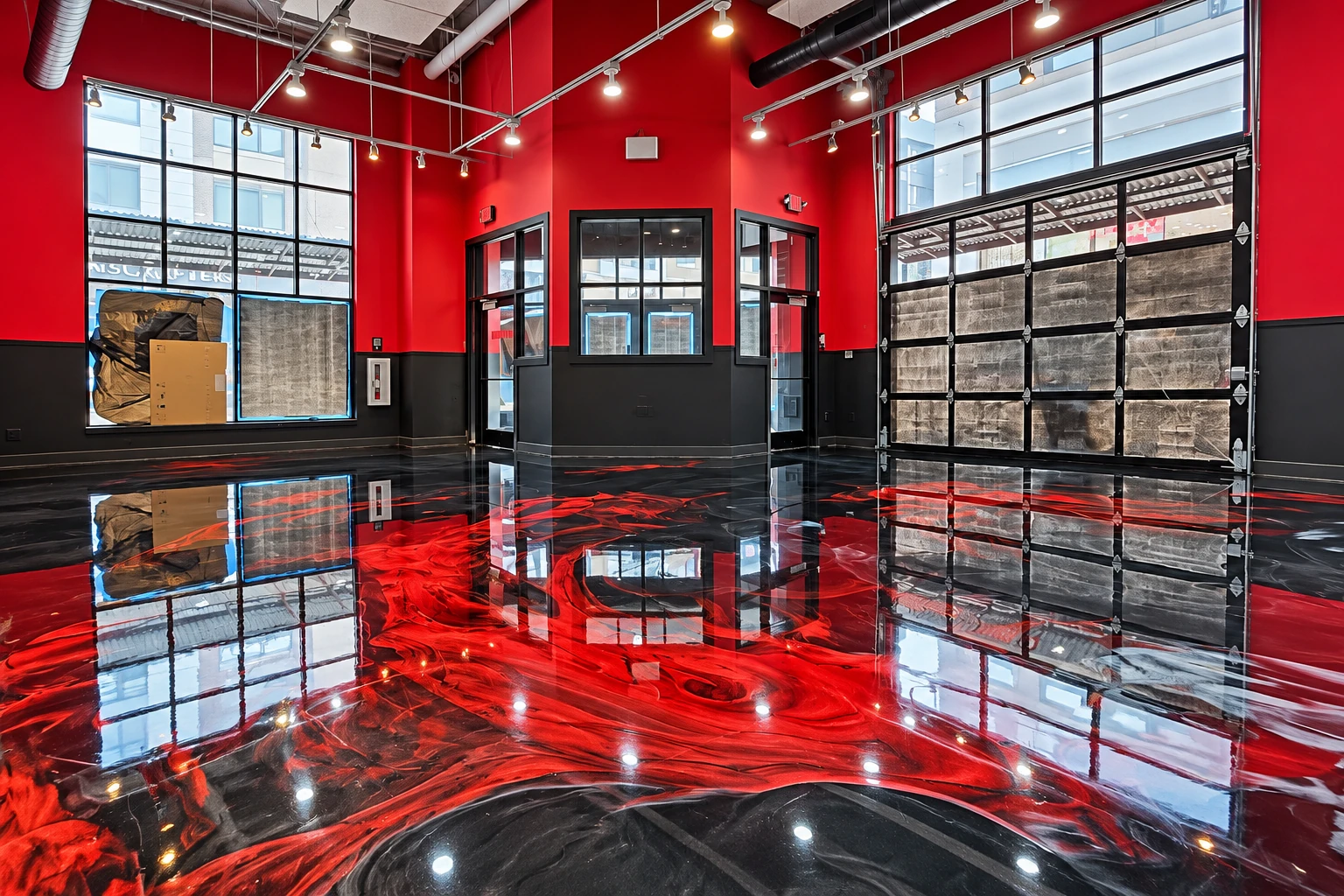
Which epoxy floor coating holds up in an Amarillo shop or plant?
Commercial and industrial epoxy floor coatings in Amarillo, TX are resin systems we lay over concrete that's been ground or shotblasted. They protect the slab and let your shop, warehouse or plant floor stand up to oil, grease and everyday chemicals.
Most of the shop owners and property managers who call me have a floor that's started to let go. It might be peeling in the drive lanes, stained where something leaks, or bare where the last coating wore through. The price moves with the size of the floor, how much grinding and repair the slab needs, and how tough a system your work calls for. The schedule depends on cure time, the temperature in the building and how long you can keep your heaviest traffic off. We're fully licensed and insured, and the written price from my visit will tell you where your floor lands.
What happens after you call us about a commercial floor?
Call and tell me about it
Calls come to me any day from 6 AM to 11 PM, and I'll ask what the floor is and how you use it. It helps to have the square footage, the chemicals and traffic it sees, the slab's age and the times you could close it.
I come out and look
I come out myself to look the slab over, check it for moisture and talk through which system fits your work. You get a written price, so you're comparing a real number and not a guess over the phone.
We prep, then we coat
Our crew does the grinding and repairs before any coating goes down, and I'm on the floor with them while the work gets done. We set the closure around your heaviest traffic, because loaded vehicles need far longer than foot traffic before they can come back.
We walk the floor together
When we're done, I walk the finished floor with you so you can look it over and ask anything before you reopen. Satisfaction guaranteed on every job, and that includes yours.
How we put down a commercial epoxy floor, and the work around it
I start by asking what actually lands on your floor and how long it sits there. That could be hydraulic fluid under a lift, wash water every shift or a pallet jack running the same lane all day. Then we match the system to that and plan the closure around your heaviest traffic. Our crew grinds or shotblasts the slab first so the resin has open concrete to grab, and we fill cracks and patch broken spots before anything goes down, because coatings fail at the prep far more often than at the finish. After that we prime, lay the build coats and finish with a topcoat. If your floor runs wet or oily, we'll talk about working a gritty slip-resistant aggregate into it. I'd rather tell you a slab needs more work, or that a simpler floor would serve you better, than sell you a coating that lets go.
A lot of the people who call us about a work floor have other floors too. If there's a home garage or a row of rental garages on your list, our garage floor coatings start with the same prep and use a system sized for cars and storage. When downtime is the hard limit, polyaspartic floor coatings usually cure faster than epoxy, so they can shorten the closure on floors that don't need a heavy chemical system.
Get a written price for your commercial floor
I'll get back to you within one business day to ask about the floor and set a time to come look at it myself. The estimate is free and done on site, and there's no pressure to book.
Commercial epoxy floor questions from Amarillo
How much does a commercial epoxy floor cost in Amarillo, TX?
Epoxy floor coating in Amarillo usually costs about $4 to $7 per square foot, including materials, floor preparation and application. That's general epoxy pricing that also includes garage and basement floors. An Amarillo cost guide says a large or uneven floor, cracked or broken concrete, pressure cleaning, an extra top coat, or solid or solvent epoxy can push it higher. Heavy urethane cement, static-control floors and 100%-solids high-build coatings are priced by the project and the performance they have to meet, not by the foot, so the written price from my visit is the number to plan around.
What is the best epoxy floor system for a manufacturing plant or food facility?
One coating maker's guide says standard epoxy suits most manufacturing floors with moderate chemical exposure. It recommends novolac epoxy, a tougher blend, where concentrated acids or aggressive solvents get spilled. The same guide says urethane systems do best with moisture, frequent washdowns and organic acids, which is why they suit food and beverage plants. It also warns that a floor that handles spills can fail when liquid sits on it constantly, so the right pick depends on how long things stay on your floor.
How long does a commercial epoxy floor take to cure before we can reopen?
One product's data sheet allows light foot traffic after 24 hours, light vehicles after 72 hours and heavy traffic after 7 days. Those times assume about 70 degrees and 50% humidity, and a cooler building adds drying time. That's why we set the closure by the heaviest thing that will roll across the floor, not the first person who needs to walk on it.
How long does an industrial epoxy floor last?
A Texas flooring guide says a system lasts 10 to 20 years if it's properly ground, primed, broadcast with sand or flake while the coat is wet, and topcoated. The guide says that lifespan depends on every one of those layers. When you compare quotes, check which layers each price actually includes.
What causes blisters in a new epoxy floor in hot weather?
Blisters usually come from air trapped in the concrete's pinholes, which expands as the day heats up and pushes up into the wet coating. One coating maker advises applying outside the hours when the temperature is climbing. That matters here, because Amarillo hit 90 or above on 18 days this past September, more than twice normal, and one product's data sheet limits application to between 50°F and 95°F. On a hot stretch here or in Canyon, we'll talk with you about coating while the slab is cooling, like in the evening, instead of mid-morning.
How do I know if my concrete floor is dry enough for epoxy?
One maker's guide says new concrete should cure at least 30 days before coating. For a quick check, it says to leave a weighted rubber mat or plastic sheet on the slab for 24 hours and look for darker, damp concrete underneath, and if the dampness keeps showing, the slab can't be coated. A moisture testing guide warns that the sheet check can read dry when it isn't and shouldn't be the only test for a moisture-sensitive coating. I check moisture at every estimate, and you should ask any installer what other test they run.
Other floors we can take care of
Garage Floor Coatings
If you also have a home garage, or rental units with garages, we coat those too, with a system built for hot tires and dropped tools.
Polyaspartic Floor Coatings
When closing a work floor for days isn't an option, a polyaspartic coating usually lets you back on sooner and holds its color near sunny bay doors.
Book a look at your work floor
The best dates to coat are usually in your slow season, when you can spare the floor longest, so call (806) 457-5783 or use the form while you still have dates to choose from.